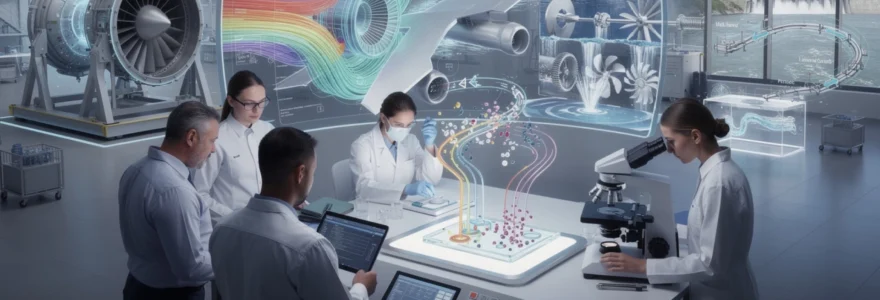
Fluid mechanics stands as the invisible force behind countless engineering breakthroughs that define modern technological advancement. From the precision of microfluidic diagnostic devices to the raw power of hydroelectric turbines, the study of fluid behaviour continues to revolutionise how engineers approach complex system design. This fundamental discipline bridges the gap between theoretical physics and practical application, enabling innovations that were once considered impossible. The profound impact of fluid dynamics extends far beyond traditional boundaries, infiltrating aerospace propulsion, biomedical diagnostics, renewable energy infrastructure, and advanced manufacturing processes with remarkable consistency.
Contemporary engineering systems increasingly rely on sophisticated fluid mechanics principles to achieve unprecedented levels of efficiency, precision, and sustainability. The integration of computational fluid dynamics with artificial intelligence has opened new frontiers in predictive modelling, whilst advances in microfluidics continue to miniaturise complex laboratory processes into portable devices. These developments reflect a broader transformation in how engineers conceptualise and implement fluid-based solutions across diverse industrial sectors.
Computational fluid dynamics applications in aerospace propulsion systems
The aerospace industry represents one of the most demanding applications of computational fluid dynamics, where the stakes of accurate fluid flow prediction directly impact safety, performance, and economic viability. Modern aircraft engines operate under extreme conditions that require precise understanding of complex fluid interactions, from subsonic intake flows to supersonic exhaust jets. The computational modelling of these systems has evolved dramatically over the past decade, incorporating increasingly sophisticated algorithms that can handle multiphase flows, combustion chemistry, and turbulent mixing with remarkable accuracy.
Propulsion system design has been revolutionised by the ability to simulate entire engine cycles within virtual environments, reducing the need for expensive physical prototyping whilst simultaneously increasing design confidence. These computational approaches enable engineers to explore design spaces that would be prohibitively costly or dangerous to investigate experimentally, leading to innovations in fuel efficiency, noise reduction, and emission control that benefit both commercial aviation and environmental sustainability.
ANSYS fluent modelling for jet engine turbomachinery design
ANSYS Fluent has emerged as the industry standard for turbomachinery analysis, offering sophisticated modelling capabilities that address the unique challenges of rotating machinery in high-temperature, high-pressure environments. The software’s advanced turbulence models, including the k-ω SST and Reynolds Stress Models, provide exceptional accuracy in predicting flow separation, secondary flows, and heat transfer characteristics within compressor and turbine stages. Engineers utilise these tools to optimise blade geometries, analyse tip clearance effects, and predict performance maps across entire operating ranges.
The implementation of conjugate heat transfer analysis within ANSYS Fluent enables simultaneous solution of fluid flow and solid heat conduction, critical for modern turbine blade cooling design. This capability allows designers to evaluate complex internal cooling passages whilst accounting for the thermal interaction between hot gas paths and cooling air systems, resulting in more durable and efficient turbomachinery components that can withstand the extreme operating conditions of modern jet engines.
Reynolds-averaged Navier-Stokes equations in supersonic flow analysis
The Reynolds-Averaged Navier-Stokes (RANS) equations form the mathematical foundation for analysing supersonic flows in aerospace applications, where compressibility effects become dominant and traditional incompressible flow assumptions no longer apply. These equations capture the essential physics of high-speed flows whilst remaining computationally tractable for complex geometries typical of aircraft and rocket nozzles. The successful application of RANS modelling to supersonic flow problems requires careful consideration of turbulence model selection, with compressibility corrections becoming increasingly important as Mach numbers exceed 2.0.
Modern computational implementations of RANS equations incorporate advanced shock-capturing schemes that can accurately predict shock wave interactions, expansion fans, and boundary layer development in supersonic environments. These capabilities prove essential for designing efficient supersonic inlets, optimising nozzle contours for maximum thrust, and predicting aerodynamic heating patterns on high-speed vehicle surfaces, directly contributing to the advancement of next-generation aerospace propulsion systems.
Large eddy simulation techniques for combustion chamber optimisation
Large Eddy Simulation (LES) represents the cutting edge of combustion modelling for gas turbine applications,
offering a detailed view of turbulent structures that directly influence flame stability, emissions, and overall combustion efficiency. Unlike RANS models, which average out the smaller turbulent scales, LES explicitly resolves the large-scale vortices that dominate mixing and heat release. This makes LES particularly well suited for studying swirl-stabilised flames, lean premixed combustion, and transient phenomena such as ignition and flame blow-off in modern low-emission combustors.
In practical engineering workflows, LES is often used in a hybrid manner: designers first employ faster RANS simulations to screen candidate geometries, then apply LES to a smaller subset of designs for in-depth analysis. This combination allows engineers to understand how design changes affect flame–wall interaction, pollutant formation, and thermoacoustic instabilities. Although LES remains computationally expensive, advances in high-performance computing and more efficient subgrid-scale models are steadily bringing routine LES-based combustion chamber optimisation within reach of industrial design cycles.
Boundary layer control methods in modern aircraft wing design
The aerodynamic performance of modern aircraft wings is heavily influenced by boundary layer behaviour, making boundary layer control a central theme in fluid mechanics-driven innovation. Techniques such as laminar flow control, vortex generators, and suction/blowing systems are applied to delay transition, suppress separation, and reduce skin friction drag. Even small reductions in drag can translate into significant fuel savings over an aircraft’s lifecycle, reinforcing why precise boundary layer management remains a top priority for aerospace engineers.
Recent developments in computational fluid dynamics and wind tunnel testing have enabled more accurate prediction of transition locations and separation bubbles on complex three-dimensional wing geometries. Engineers can now integrate passive devices, like micro-vane vortex generators, and active flow control technologies, such as pulsed blowing, into wing designs and evaluate their effectiveness virtually before committing to physical prototypes. As we look to future aircraft concepts, including blended wing bodies and ultra-high-aspect-ratio wings, advanced boundary layer control methods will continue to be instrumental in achieving ambitious efficiency and emissions targets.
Microfluidics and lab-on-chip technologies in biomedical engineering
While aerospace propulsion often focuses on high-speed, high-Reynolds-number flows, biomedical microfluidics operates at the opposite end of the spectrum, where viscous forces dominate and flows are almost entirely laminar. Yet the same fundamental principles of fluid mechanics underpin both domains, illustrating how scalable these concepts truly are. In biomedical engineering, microfluidics and lab-on-chip technologies are transforming diagnostics, drug delivery, and personalised medicine by manipulating minute volumes of fluid with extraordinary precision.
By miniaturising complex laboratory workflows onto microchips, engineers and scientists can reduce reagent consumption, shorten analysis times, and enable point-of-care testing far from centralised facilities. The challenge, and the opportunity, lies in exploiting laminar flow, surface tension, and electrokinetic effects in microchannels and droplets to perform complex biochemical operations. Understanding these micro-scale fluid mechanics phenomena is essential if you are designing next-generation diagnostic devices or targeted drug delivery platforms.
Laminar flow phenomena in microchannels for drug delivery systems
In microchannels, flows typically exhibit very low Reynolds numbers, meaning they are strictly laminar and highly predictable. This predictable behaviour is a powerful asset in drug delivery systems, where precise control over flow rate, concentration gradients, and residence times is critical. For example, microfluidic devices can generate highly controlled drug concentration profiles, enabling the fine-tuning of dose–response relationships in preclinical studies or targeted therapies.
Engineers often use Poiseuille flow assumptions and analytical solutions of the Navier–Stokes equations to estimate pressure drops and velocity profiles in these channels. Because diffusion dominates mixing at these scales, channel geometries must be carefully designed—using, for instance, serpentine or herringbone structures—to enhance transverse transport without inducing turbulence. When you think of a microchannel, it helps to imagine a smoothly flowing, perfectly layered river, where each “layer” of fluid retains its identity unless diffusion or smart geometry forces it to mix.
Electroosmotic flow control in point-of-care diagnostic devices
Electroosmotic flow (EOF) offers a unique method of driving fluid motion in microchannels without mechanical pumps, relying instead on electric fields interacting with the electrical double layer at solid–liquid interfaces. In many lab-on-chip and point-of-care diagnostic devices, EOF is used to manipulate buffers, blood plasma, or reagent solutions with sub-nanolitre precision. Because the resulting velocity profile in EOF-driven flow is nearly plug-like, it reduces dispersion and helps maintain sharper analyte bands during separation processes such as capillary electrophoresis.
Designing effective EOF systems requires a deep understanding of zeta potential, ionic strength, and surface chemistry, all of which directly influence the electrokinetic mobility of the fluid. Engineers must carefully balance applied voltages, Joule heating, and sample integrity to avoid degrading sensitive biomolecules. In practice, integrating EOF into portable diagnostic platforms allows for highly compact, low-maintenance systems—ideal for resource-limited settings where traditional pumping technologies are impractical.
Surface tension-driven mixing in digital microfluidics platforms
Digital microfluidics takes a different approach to fluid handling, manipulating discrete droplets on flat substrates using electric fields, surface tension, or thermal gradients. Here, surface tension is both the challenge and the opportunity: it resists droplet deformation but also provides the restoring force that enables precise control over droplet movement, merging, and splitting. In the absence of turbulence, mixing within droplets is inherently slow, so engineers must exploit surface tension-driven internal recirculation and controlled deformation to boost mixing rates.
Techniques such as electrowetting-on-dielectric (EWOD) enable rapid reconfiguration of droplet paths, effectively turning a microfluidic chip into a reprogrammable “lab-on-a-screen.” When two droplets merge, surface tension-driven flows generate complex internal vortices that significantly accelerate mixing, analogous to swirling cream in a cup of coffee. By carefully timing these merge, split, and transport operations, designers can orchestrate multi-step biochemical assays on a single chip, opening doors to highly flexible, software-defined diagnostic platforms.
Droplet formation dynamics in organ-on-chip manufacturing
Organ-on-chip technologies often rely on controlled droplet formation to encapsulate cells, biomaterials, or reagents within micro-scale compartments that mimic physiological environments. In droplet microfluidics, the interplay between viscous forces, inertia, and surface tension—captured by dimensionless numbers such as the Capillary and Weber numbers—governs droplet size, frequency, and monodispersity. T-junctions, flow-focusing geometries, and co-flow devices are commonly used configurations to generate highly uniform droplets at kilohertz frequencies.
Achieving reliable droplet formation requires careful tuning of flow rate ratios between continuous and dispersed phases, as well as precise control of interfacial tension through surfactant selection. If we think of each droplet as a tiny, self-contained bioreactor, then controlling its formation dynamics becomes critical for ensuring consistent cell culture conditions in organ-on-chip systems. As these platforms move from research prototypes to industrial-scale production, robust fluid mechanics models and high-throughput droplet generation strategies will be essential for scalability and regulatory compliance.
Hydraulic system innovations in renewable energy infrastructure
Beyond biomedical devices, fluid mechanics is a cornerstone of renewable energy systems, particularly in hydropower and emerging tidal energy technologies. Here, hydraulic systems harness the kinetic and potential energy of water to generate electricity on scales ranging from small run-of-river installations to massive pumped-storage plants. Fluid dynamics not only dictates turbine performance but also shapes the design of waterways, surge tanks, and control systems that ensure safe and efficient operation.
As global energy systems transition toward lower carbon footprints, optimising hydraulic components through advanced fluid mechanics is becoming increasingly important. Whether you are refining Francis turbine blade geometry or analysing jet impacts in Pelton wheels, accurate modelling of free-surface flows, cavitation, and transient hydraulic events can deliver substantial gains in energy yield and equipment longevity. This is where classical theory, numerical simulation, and experimental testing intersect to drive innovation in renewable energy infrastructure.
Francis turbine blade geometry optimisation using euler equations
Francis turbines, widely used in medium-head hydropower plants, exemplify how fundamental fluid mechanics principles translate directly into performance improvements. At their core, the design of Francis turbine runner blades relies on the Euler turbine equation, which relates the change in angular momentum of the fluid to the torque and power produced. By optimising the inlet and outlet velocity triangles, engineers can maximise energy extraction while minimising hydraulic losses and cavitation risk.
Modern design processes combine inviscid flow analysis based on the Euler equations with viscous CFD simulations to refine three-dimensional blade shapes. Subtle adjustments to blade twist, thickness, and curvature can significantly improve efficiency across a wide range of operating conditions. In practice, this optimisation often involves multi-objective design techniques, where hydraulic efficiency, structural integrity, and manufacturability are balanced to produce robust, high-performing turbine runners.
Pelton wheel efficiency enhancement through jet trajectory analysis
Pelton wheels are impulse turbines specifically designed for high-head, low-flow hydropower applications, where water jets transfer momentum to spoon-shaped buckets mounted on a runner. The efficiency of a Pelton turbine depends critically on how well the water jet is guided, deflected, and discharged from the buckets, which in turn is governed by jet trajectory and breakup characteristics. Detailed fluid mechanics analysis helps engineers determine the optimal nozzle configuration, jet diameter, and bucket geometry for maximum energy transfer.
By using CFD and high-speed visualisation, designers can study how the jet adheres to, separates from, and interacts with bucket surfaces. Ideally, the jet should exit with minimal residual kinetic energy and without interference between successive jets or buckets. You can think of each jet as a “bullet” of water whose path, impact angle, and spread must be finely tuned to avoid wasted energy. Improvements in jet trajectory analysis have led to Pelton wheels with higher efficiencies, greater flexibility under part-load operation, and reduced mechanical wear.
Kaplan turbine variable pitch mechanisms for tidal energy harvesting
Kaplan turbines, originally developed for low-head river applications, are increasingly being adapted for tidal and estuarine energy projects. Their key innovation lies in variable pitch blades that can adjust to changing flow conditions, maintaining high efficiency across a broad operating envelope. From a fluid mechanics perspective, this means continuously aligning blade angle with the incoming flow direction to optimise circulation and minimise flow separation on blade surfaces.
In tidal environments, flow direction and magnitude vary with the tidal cycle, making adaptable blade pitch mechanisms especially valuable. Engineers must model unsteady inflow conditions, free-surface effects, and sediment transport to ensure reliable long-term performance. Integrating real-time flow measurements with control algorithms allows Kaplan-type tidal turbines to dynamically adjust pitch settings, similar to how modern wind turbines feather their blades. This synergy between fluid mechanics, control theory, and mechanical design is central to unlocking predictable, renewable energy from coastal resources.
Pumped-storage hydropower surge tank design considerations
Pumped-storage hydropower plants play a critical role in grid stability by storing excess energy as gravitational potential and releasing it during peak demand. However, rapid changes in flow rate during pumping and generating modes can induce severe transient pressures, known as water hammer, in long penstocks. Surge tanks are strategically placed hydraulic structures that mitigate these transients by providing a buffer volume where water levels can oscillate, thereby reducing pressure spikes and flow reversals.
Designing an effective surge tank involves solving unsteady flow equations, such as the water hammer equations, and analysing the interaction between pipeline elasticity, inertia, and gravitational effects. Engineers must consider surge tank geometry, elevation, and connection details to prevent dangerous pressure fluctuations while maintaining acceptable response times for power plant regulation. From an intuitive standpoint, a well-designed surge tank behaves like a hydraulic “shock absorber,” smoothing out rapid changes and protecting both equipment and civil structures from transient loads.
Advanced heat transfer mechanisms in industrial process engineering
In industrial process engineering, fluid mechanics and heat transfer are inseparable, governing everything from chemical reactors and heat exchangers to cooling systems and distillation columns. Convective heat transfer, in particular, depends strongly on flow regime, boundary layer development, and turbulence intensity. As industries push for higher throughput and tighter temperature control, understanding and engineering these heat transfer mechanisms becomes increasingly critical.
Advanced numerical models now allow engineers to simulate conjugate heat transfer, boiling, condensation, and phase change phenomena in complex geometries. For instance, optimising the layout of tube bundles in a shell-and-tube heat exchanger or designing enhanced surfaces for compact heat exchangers relies on accurate prediction of local heat transfer coefficients and pressure drops. By treating heat exchangers as “fluid machines” that transform thermal energy under strict constraints, we can systematically improve their performance, reduce fouling, and lower operational costs.
Fluid-structure interaction analysis in civil engineering applications
Fluid-structure interaction (FSI) sits at the crossroads of structural mechanics and fluid dynamics, and it is particularly important in civil engineering where structures must withstand wind, waves, and floods. Bridges, tall buildings, offshore platforms, and dams all experience dynamic loads from surrounding fluids that can induce vibrations, fatigue, or even catastrophic failure if not properly understood. Classic examples include vortex-induced vibrations on cylindrical chimneys or bridge decks subjected to turbulent wind flows.
To analyse these phenomena, engineers employ coupled simulations where structural deformation feeds back into the fluid domain and vice versa. This two-way coupling is essential for capturing effects like aeroelastic flutter or sloshing in storage tanks during earthquakes. Have you ever wondered why some modern skyscrapers have tuned mass dampers or aerodynamic spoilers? These features stem directly from FSI studies that identify critical flow patterns and structural modes, leading to design modifications that enhance stability and occupant comfort.
Magnetohydrodynamics integration in next-generation plasma technologies
At the frontier of energy and propulsion research, magnetohydrodynamics (MHD) extends classical fluid mechanics to electrically conducting fluids such as plasmas, liquid metals, and ionised gases. In these systems, fluid motion and electromagnetic fields are tightly coupled, leading to rich and often counterintuitive behaviour. Applications range from fusion reactor confinement and astrophysical flows to MHD generators and advanced plasma thrusters for spacecraft propulsion.
In next-generation plasma technologies, MHD models help engineers understand how magnetic fields can be used to shape, stabilise, or accelerate plasmas. For example, in Hall-effect and magnetoplasmadynamic thrusters, magnetic fields direct ionised exhaust flows to generate thrust more efficiently than traditional chemical rockets. The governing equations combine Navier–Stokes with Maxwell’s equations, forming a complex but powerful framework for predicting plasma behaviour. As computational tools and experimental diagnostics improve, integrating MHD into engineering design workflows will be essential for harnessing plasma-based systems in practical, scalable applications.