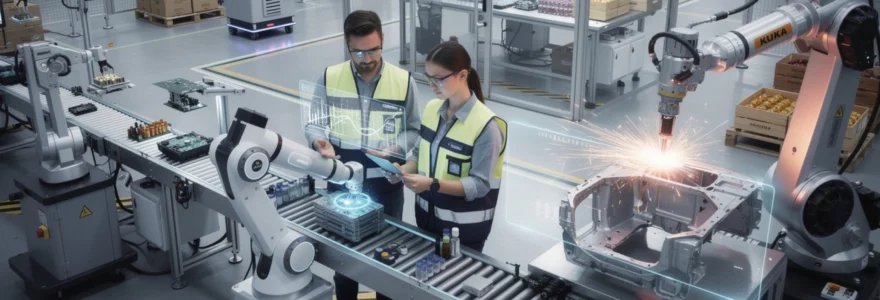
The industrial landscape is experiencing an unprecedented transformation as automated robots reshape manufacturing processes across every sector imaginable. From automotive assembly lines to pharmaceutical clean rooms, robotic systems are delivering efficiency gains that seemed impossible just a decade ago. Modern manufacturing facilities now operate with levels of precision, speed, and consistency that human workers simply cannot match, whilst simultaneously reducing operational costs and improving workplace safety.
This technological revolution extends far beyond simple task automation. Today’s advanced robotic systems integrate artificial intelligence, machine learning algorithms, and sophisticated sensor networks to create truly intelligent manufacturing environments. These smart factories can adapt to changing production requirements in real-time, predict maintenance needs before failures occur, and maintain quality standards that approach zero-defect manufacturing. The convergence of robotics with Industry 4.0 technologies is fundamentally redefining what’s possible in industrial production.
Industrial automation technologies transforming manufacturing workflows
Modern manufacturing facilities are embracing a comprehensive suite of automation technologies that work synergistically to optimise production workflows. These integrated systems combine hardware innovations with sophisticated software platforms to create manufacturing environments that respond intelligently to changing conditions and requirements.
Collaborative robotics (cobots) integration in assembly lines
Collaborative robots represent a paradigm shift in industrial automation, designed specifically to work alongside human operators without traditional safety barriers. Unlike conventional industrial robots that operate in isolated cells, cobots feature advanced force-limiting technology and sophisticated collision detection systems that enable safe human-robot collaboration. These systems typically incorporate torque sensors at each joint, allowing them to detect unexpected contact and immediately reduce force or stop movement entirely.
The implementation of cobots in assembly lines has proven particularly effective in automotive manufacturing, where companies like BMW and Ford have deployed Universal Robots’ UR series to handle delicate assembly tasks. These robots excel at applications requiring both precision and adaptability, such as installing electrical components or applying adhesives with consistent pressure and placement accuracy. The flexibility of cobots allows manufacturers to reconfigure production lines rapidly, adapting to new product variants or changing production volumes without extensive downtime.
Artificial Intelligence-Driven predictive maintenance systems
Predictive maintenance powered by artificial intelligence is revolutionising equipment reliability and operational efficiency in manufacturing environments. These systems continuously monitor machine performance through vibration sensors, temperature gauges, and acoustic monitoring devices, analysing patterns that indicate potential failures before they occur. Machine learning algorithms process this sensor data alongside historical maintenance records to predict optimal maintenance schedules with remarkable accuracy.
Companies implementing AI-driven predictive maintenance report maintenance cost reductions of up to 30% whilst achieving equipment uptime improvements of 15-20%. The technology excels at identifying subtle degradation patterns that human technicians might overlook, such as gradual bearing wear or developing hydraulic leaks. Advanced predictive maintenance systems can forecast equipment failures with 85-90% accuracy, enabling manufacturers to schedule maintenance during planned downtime rather than responding to unexpected breakdowns.
Machine learning algorithms for quality control optimisation
Machine learning applications in quality control have transformed manufacturing by enabling real-time analysis of production variables and automatic adjustment of process parameters. These systems continuously learn from production data, identifying correlations between input variables and quality outcomes that might not be apparent through traditional statistical methods. Neural networks can process hundreds of variables simultaneously, detecting subtle patterns that indicate quality drift before defective products are produced.
Implementation of machine learning-based quality control systems typically results in defect rate reductions of 40-60% compared to traditional inspection methods. The technology proves particularly valuable in industries with complex quality requirements, such as semiconductor manufacturing or pharmaceutical production, where microscopic variations can significantly impact product performance. These intelligent systems adapt their inspection criteria based on historical data, becoming more accurate and efficient over time.
Computer vision technology in defect detection processes
Computer vision systems have become indispensable tools for automated defect detection, offering inspection capabilities that surpass human visual acuity in both speed and consistency. Modern vision systems utilise high-resolution cameras combined with sophisticated image processing algorithms to identify surface defects, dimensional variations, and assembly errors with micron-level precision. These systems can inspect thousands of components per hour whilst maintaining consistent detection standards regardless of operator fatigue or environmental conditions.
The integration of deep learning with computer vision has enabled these systems to recognise complex defect patterns that traditional
The integration of deep learning with computer vision has enabled these systems to recognise complex defect patterns that traditional rule-based vision algorithms would miss. Instead of relying solely on pre-programmed thresholds, convolutional neural networks learn what a “good” part looks like across thousands of examples and can flag even subtle deviations. This dramatically improves detection of scratches, micro-cracks, misalignments, and contamination in fast-moving production environments. For manufacturers aiming for near-zero-defect manufacturing, AI-powered computer vision becomes a central pillar of their industrial automation strategy.
Iot sensor networks for real-time process monitoring
Internet of Things (IoT) sensor networks provide the data backbone that makes automated robots and smart factories truly intelligent. By deploying interconnected sensors across machines, production lines, and even within products themselves, manufacturers gain continuous visibility into temperature, vibration, torque, humidity, and energy consumption. This granular, real-time process monitoring enables faster decision-making, tighter process control, and early detection of anomalies that could impact quality or throughput.
In a typical industrial plant, IoT-enabled devices transmit data to a central platform where advanced analytics and dashboards convert raw signals into actionable insights. For example, a sudden increase in motor current on a robotic arm might indicate a mechanical obstruction, prompting an automatic slowdown or emergency stop. Over time, analysing historical IoT data helps optimise cycle times, reduce scrap, and identify bottlenecks. When combined with industrial robots, IoT sensor networks effectively act as the nervous system of the smart factory, ensuring every movement, process, and parameter remains within optimal bounds.
Robotic process automation applications across manufacturing sectors
Although the term “robotic process automation” (RPA) is often associated with software bots in office environments, its principles are increasingly applied to physical processes on the factory floor. Automated robots orchestrated by intelligent control systems now handle entire end-to-end workflows, from inbound material handling to final packaging. The impact of these integrated robotic systems is particularly visible in sectors like automotive, pharmaceuticals, food processing, and electronics manufacturing, where high throughput and strict compliance are essential.
Automotive industry: tesla’s gigafactory production line automation
Tesla’s Gigafactories have become emblematic of highly automated manufacturing environments, where industrial robots and automated guided vehicles (AGVs) coordinate to produce batteries and vehicles at scale. In these facilities, six-axis robots perform precision welding, laser cutting, and adhesive dispensing, while autonomous mobile robots transport materials between workstations. This high level of automation allows Tesla to compress production steps, reduce takt times, and maintain tight control over quality-critical processes such as battery cell assembly.
The key to Tesla’s approach is deep integration between robotics, real-time data analytics, and digital twins of the production line. Every robot action is monitored and adjusted based on sensor feedback, and process changes can be simulated virtually before deployment. For traditional automotive manufacturers looking to emulate aspects of the Gigafactory model, the lesson is clear: automation success comes not just from deploying more robots, but from integrating them into a unified, data-driven production ecosystem.
Pharmaceutical manufacturing: GMP-compliant robotic dispensing systems
In pharmaceutical manufacturing, automated robots must operate under stringent regulatory frameworks such as Good Manufacturing Practice (GMP). Robotic dispensing systems are increasingly used to handle sterile filling, dose preparation, and packaging, minimising the risk of human contamination and dosage errors. These robots often work in isolators or clean rooms, where their repeatability and ability to maintain consistent aseptic conditions are vital for patient safety and regulatory compliance.
Modern GMP-compliant robotic systems combine high-precision actuators with validated software routines and comprehensive electronic batch records. For instance, a robotic arm equipped with precision pumps can dispense micro-litre volumes of active ingredients with far greater consistency than manual pipetting. Integrated vision and weighing systems verify each dose in real time, ensuring every vial or syringe meets specification. For pharmaceutical companies, this level of automation not only reduces batch failures and recalls but also simplifies audits, as every robot movement and process parameter is fully traceable.
Food processing: automated packaging and palletising solutions
Food and beverage manufacturers have embraced automated robots to handle packaging, labelling, and palletising, where speed and hygiene are paramount. Robotic case packers and palletisers can manage a wide range of product formats, from bottled drinks to frozen goods, adjusting on the fly to different sizes and pack configurations. End-of-arm tools equipped with suction cups, grippers, or clamps allow robots to handle delicate items without damage, while stainless steel designs and washdown-rated components ensure compliance with food safety standards.
Automated packaging lines often integrate conveyor systems, checkweighers, metal detectors, and vision inspection, all coordinated by a central control system. When demand spikes or product variants change, recipes can be updated via software rather than mechanical retooling. For a mid-sized producer, this flexibility can mean the difference between turning down a new private-label contract and reconfiguring the line overnight. As labour shortages and rising wage costs continue in many regions, automated packaging and palletising solutions provide a scalable, reliable alternative that maintains output around the clock.
Electronics assembly: pick-and-place robots for PCB manufacturing
Electronics manufacturing is one of the most mature segments for robotic automation, particularly in printed circuit board (PCB) assembly. High-speed pick-and-place robots populate boards with thousands of tiny components per minute, positioning each part with sub-millimetre accuracy. These systems use machine vision to align PCBs and verify component orientation, ensuring that even the smallest surface-mount devices are placed correctly before soldering.
The combination of automated robots, reflow ovens, and automated optical inspection (AOI) systems creates a highly repeatable, closed-loop electronics assembly process. If AOI identifies a systematic placement issue, process parameters can be adjusted automatically, such as feeder tension or nozzle vacuum. For manufacturers producing smartphones, wearables, or automotive electronics, this level of integrated automation is essential to meet both volume and reliability requirements. It also enables rapid introduction of new product variants, as pick-and-place programs can be updated far faster than manual assembly instructions.
Advanced robotics hardware revolutionising production capabilities
Behind every successful industrial automation project lies a foundation of advanced robotics hardware engineered for durability, precision, and flexibility. From six-axis articulated robots to SCARA and delta configurations, each robot type brings distinct performance characteristics tailored to specific tasks. Understanding these hardware options is crucial when you are designing automated systems that must balance speed, payload, reach, and accuracy.
Six-axis industrial robots: KUKA KR QUANTEC series applications
Six-axis industrial robots, such as the KUKA KR QUANTEC series, are the workhorses of modern factories, capable of performing complex 3D motions with high repeatability. With payloads ranging from 90 kg to over 300 kg and reaches exceeding 3,000 mm, these robots handle tasks from spot welding and heavy material handling to precision machining and laser processing. Their articulated joints provide human-like dexterity, allowing them to access tight spaces and work on large or irregularly shaped parts.
One of the strengths of the KR QUANTEC range is its combination of high stiffness and dynamic performance, which supports shorter cycle times without sacrificing accuracy. When integrated with offline programming and simulation tools, engineers can optimise robot paths to minimise energy use and mechanical wear. In industries such as automotive body-in-white or heavy machinery production, deploying six-axis robots often results in dramatic productivity gains, making them a cornerstone of high-throughput, flexible manufacturing systems.
SCARA robots for high-speed precision assembly tasks
Selective Compliance Assembly Robot Arm (SCARA) robots are designed for fast, precise movements in the horizontal plane, making them ideal for assembly, screwdriving, and small-part handling. They excel in applications where components must be placed quickly and accurately on a flat surface, such as inserting connectors, loading fixtures, or performing light press fits. With cycle times often measured in fractions of a second, SCARA robots can significantly outperform manual operators in repetitive, precision-intensive tasks.
Because of their comparatively simple kinematics and compact footprint, SCARA robots are easier to integrate into existing production lines than many larger articulated robots. You can think of them as highly specialised, ultra-fast “robotic wrists” that handle the most repetitive assembly operations, freeing human workers to focus on exception handling and process optimisation. In electronics, medical device, and consumer goods manufacturing, SCARA robots are a key enabler of high-volume, high-mix production strategies.
Delta robots in high-frequency pick-and-pack operations
Delta robots, recognisable by their spider-like parallel-arm design, are built for extremely high-speed pick-and-pack operations. Mounted above the workspace, they use lightweight arms connected to a common platform to move end-effectors with incredible acceleration and precision. In food processing, pharmaceuticals, and e-commerce fulfilment, delta robots can pick assorted products from a moving conveyor and place them into trays, blisters, or cartons at rates exceeding 100 picks per minute.
The combination of delta robots with advanced vision systems allows for “random bin picking” and on-the-fly product tracking. Instead of relying on rigid, pre-aligned infeed systems, the robot identifies item position and orientation in real time and adjusts its trajectory accordingly. This is similar to how your eye and hand coordinate when grabbing items from a moving belt, but at a speed and consistency humans cannot sustain. For manufacturers dealing with variable product flows and packaging formats, delta robots provide the agility and throughput needed to stay competitive.
Articulated robotic arms with force feedback control systems
Next-generation articulated robotic arms equipped with force and torque feedback are unlocking new applications that were previously too delicate or complex to automate. By measuring interaction forces at the wrist or along each joint, these robots can perform tasks such as precision polishing, deburring, insertion, and even collaborative assembly with a human operator. Force-controlled robots can “feel” when a part is seated correctly, when a surface has been polished to specification, or when an unexpected obstacle is encountered.
This level of tactile sensitivity is especially valuable in industries like aerospace, medical device manufacturing, and high-end automotive, where surface finish and assembly integrity are critical. It also improves worker safety when robots and humans share a workspace, as the robot can react within milliseconds to unexpected contact. You can think of force feedback as giving industrial robots a sense of touch, transforming them from rigid, pre-programmed machines into adaptive tools that respond dynamically to their environment.
Economic impact and ROI metrics of industrial robot implementation
Investing in industrial robots inevitably raises one central question: what is the return on investment (ROI)? While the cost of advanced robotic systems can appear significant, numerous studies and real-world deployments show payback periods often ranging from 18 to 36 months, depending on the application. The economic impact goes beyond direct labour savings to include reduced scrap, higher throughput, improved quality, and stronger resilience against labour shortages or demand spikes.
To evaluate ROI, manufacturers typically track metrics such as overall equipment effectiveness (OEE), units produced per labour hour, defect rates, and unplanned downtime. For instance, a mid-sized manufacturer might see a 25–40% increase in OEE after deploying automated robots for critical bottleneck operations. At the same time, consistent quality can reduce warranty claims and returns by double-digit percentages. When you quantify these gains over several years, the total value generated by industrial automation often far exceeds the initial capital expenditure.
However, achieving strong ROI requires careful planning and realistic scoping. Hidden costs such as training, integration with existing IT systems, and safety upgrades must be considered upfront. Many successful manufacturers start with a pilot cell focused on a single high-impact process, using the results to refine their automation roadmap. By treating industrial robot implementation as a strategic, staged initiative rather than a one-off purchase, you can de-risk investment and build internal expertise that compounds over time.
Safety protocols and risk assessment in automated manufacturing environments
As automated robots become more prevalent on the factory floor, robust safety protocols are essential to protect workers and maintain compliance with standards such as ISO 10218 and ISO/TS 15066. Effective safety in automated manufacturing environments starts with a formal risk assessment that evaluates potential hazards associated with robot motion, tooling, and interaction with humans. This assessment informs the selection of safeguards, which may include physical guarding, light curtains, safety scanners, and emergency stop systems.
For collaborative robotics, safety considerations extend beyond traditional barriers. Force and speed limits, safe stop modes, and power-and-force limiting functions ensure that any contact between a cobot and a human remains within acceptable thresholds. Regular validation and re-validation of safety functions are critical, especially when you reconfigure a cell or introduce new tasks. Think of safety not as a one-time checkbox, but as an ongoing process that evolves alongside your automation strategy.
Training also plays a vital role in maintaining safe automated environments. Operators, maintenance staff, and engineers must understand safe working distances, lockout/tagout procedures, and how to respond to abnormal robot behaviour. Many organisations adopt a layered approach, combining engineering controls with clear visual signage, standard operating procedures, and periodic safety audits. When done correctly, enhanced safety often goes hand-in-hand with higher productivity, as reduced incidents lead to fewer disruptions and a more stable operating environment.
Future trajectory of industry 4.0 and smart factory integration
The convergence of automated robots, AI, IoT, and high-speed connectivity is setting the stage for the next phase of industrial transformation. As we move deeper into the Industry 4.0 era, smart factory integration will increasingly revolve around interoperable platforms where machines, software systems, and humans collaborate in real time. Standards for data exchange and device interoperability will make it easier to plug new robots and sensors into existing ecosystems, much like adding a new app to your smartphone.
Looking ahead, we can expect greater use of digital twins, where virtual replicas of factories and robotic cells are used to simulate, optimise, and troubleshoot processes before changes are made in the physical world. Edge computing and 5G will support ultra-low-latency control of robots and mobile systems, enabling more decentralised decision-making. At the same time, concepts associated with Industry 5.0—such as human-centric design, sustainability, and ethical AI—will influence how automation projects are conceived and deployed.
For manufacturers, the key question is not whether to adopt automated robots and smart factory technologies, but how to do so in a way that aligns with business strategy and workforce development. Organisations that invest in upskilling, cross-functional collaboration, and long-term technology roadmaps will be best positioned to harness the full potential of industrial automation. In many ways, we are only at the beginning of this journey: as robotic systems become more intelligent, connected, and collaborative, the opportunities to reinvent industrial processes will continue to expand.